
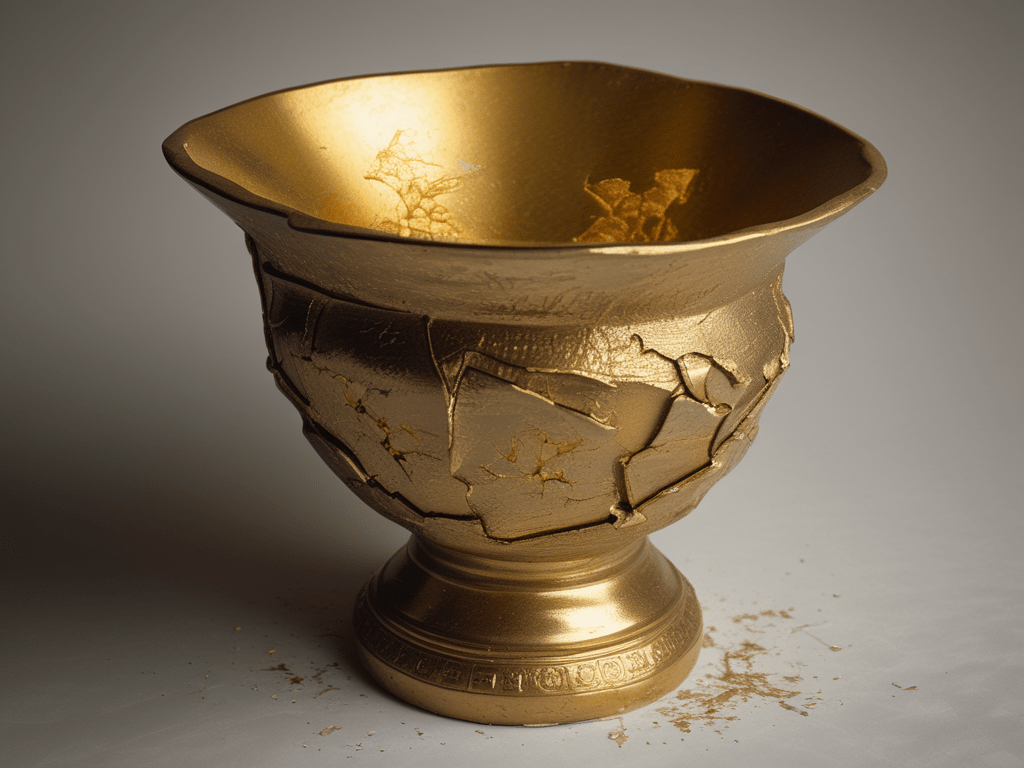

In our fast-paced world, it’s easy to overlook the quiet moments where we can truly connect with ourselves. Life often hands us challenges and heartbreaks that leave us feeling shattered and incomplete. But as the quote beautifully captures, “In all of our lives there’s a certain brokenness, a certain pain. Instead of rejecting those parts of ourselves or our lives, we use a kind of kintsugi to mend them. We use mindful breathing, mindful walking, mindful thinking, in order to embrace what is. We sit quietly, being our own soulmate. In this way, those broken pieces aren’t wasted or thrown away. Instead, they’re held together with love, with respect, with dignity.”
Understanding Kintsugi: The Art of Golden Repair
Kintsugi is a traditional Japanese art form that involves repairing broken pottery with lacquer mixed with powdered gold, silver, or platinum. This technique doesn’t hide the cracks and imperfections; instead, it highlights them, turning the once-broken item into something more beautiful and valuable than before. The philosophy behind kintsugi is deeply rooted in the belief that beauty lies in imperfection and that brokenness is not something to be hidden but celebrated.
Applying Kintsugi to Our Lives
Just like broken pottery, we too have our cracks and flaws. Life’s trials and tribulations can leave us feeling fragmented, but these experiences also shape us into who we are. Rather than shunning these parts of ourselves, we can embrace them using a metaphorical kintsugi. Here’s how:
Mindful Breathing
Mindful breathing is a powerful tool to ground ourselves in the present moment. By focusing on our breath, we can calm our minds and bodies, allowing us to face our pain with clarity and compassion. This practice helps us acknowledge our broken parts without judgment, fostering a sense of acceptance and peace.
Mindful Walking
Walking mindfully means being fully present with each step we take. It’s about feeling the ground beneath our feet and being aware of our surroundings. This practice encourages us to move forward in life with intention and grace, acknowledging our past wounds while embracing the journey ahead.
Mindful Thinking
Our thoughts have a profound impact on how we perceive ourselves and our experiences. By cultivating mindful thinking, we can observe our thoughts without getting entangled in them. This practice helps us reframe our narratives, allowing us to see our brokenness as a part of our unique story rather than a source of shame.
Being Our Own Soulmate
In the hustle and bustle of life, we often forget to nurture the most important relationship we have—the one with ourselves. Sitting quietly and being our own soulmate means taking time to understand and love ourselves fully. It’s about offering ourselves the same compassion and respect that we would offer to a dear friend. This self-love is the golden lacquer that mends our broken pieces, holding us together with dignity and grace.
Transforming Brokenness into Beauty
When we embrace our brokenness with love and respect, we transform it into something beautiful. Our scars become symbols of resilience and strength, reminding us of the battles we’ve fought and the wisdom we’ve gained. By practicing mindful breathing, walking, and thinking, we can mend our wounds and create a life that is not just whole but exquisitely unique.
Life’s imperfections are not to be hidden away but celebrated. Just as kintsugi turns broken pottery into works of art, we too can transform our brokenness into a source of beauty and strength. By embracing mindful practices and nurturing our relationship with ourselves, we hold our broken pieces together with love, respect, and dignity. In this way, our life’s challenges become the golden seams that make us who we are, uniquely beautiful and whole.
Sarah’s Story
Take Sarah, for instance. After a painful divorce, she felt utterly broken and lost. Instead of allowing herself to be consumed by bitterness, Sarah chose to embrace her pain. She began practicing mindful breathing to calm her anxious mind, went on mindful walks to reconnect with herself and nature, and spent quiet moments journaling her thoughts. Through this process, Sarah learned to love herself again. She saw her divorce not as a failure but as a chapter in her life that taught her invaluable lessons about self-worth and resilience. Her broken pieces, mended with self-compassion and mindful practices, became the foundation for a stronger, more beautiful version of herself.
Embrace Your Own Kintsugi
Now, I invite you to embrace your own kintsugi. Reflect on the parts of your life that feel broken or painful. Instead of rejecting them, practice mindful breathing, walking, and thinking to mend these areas with love and respect. Sit quietly with yourself, being your own soulmate, and recognize the beauty in your imperfections. Remember, your scars and broken pieces are what make you unique and beautiful. Embrace them, and transform your brokenness into a testament of your strength and resilience.
 The Art of Grit
Leave a comment