
(5 Minutes)
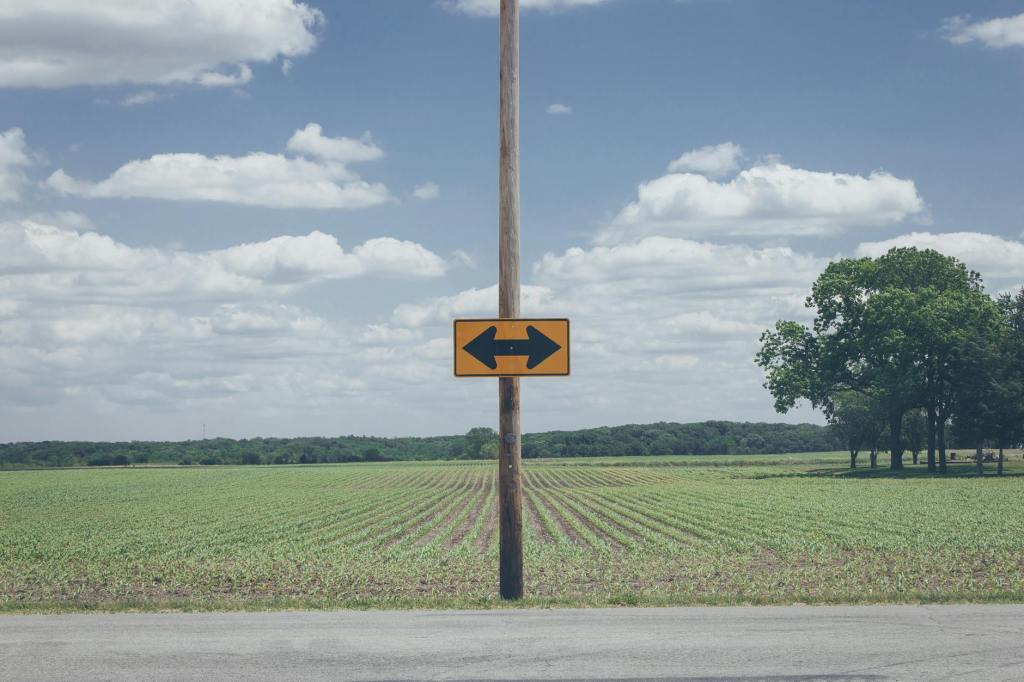
There comes a moment in life when we find ourselves at a crossroads, staring down two or more uncertain paths. Doubt creeps in, whispering, What if I choose the wrong one? The fear of making a mistake can paralyze us, keeping us stuck in place, analyzing every possible outcome, hoping to predict the right decision. I’ve been there—lingering in hesitation, as if enough thinking would somehow guarantee the perfect choice. But here’s the truth I’ve come to realize: we can’t always know what’s “right.” The future is unknown. What matters far more than making the perfect choice is making a committed choice.
The Fallacy of the “Right” Decision
It’s tempting to believe that if we think long and hard enough, the correct answer will emerge, crystal clear. But life isn’t an equation with a single solution—it’s a dynamic, ever-changing landscape where clarity often comes only in hindsight. The reality is, no decision is inherently right or wrong until we act on it. Most of the time, the common denominator of any successful outcome isn’t the choice itself—it’s the commitment behind it.
I think about Abraham Lincoln in this context. Before becoming one of the most revered presidents in American history, Lincoln made choices that, at the time, felt fraught with uncertainty. He failed in business, lost multiple elections, and faced deep criticism for his stance on slavery. Imagine if he had waited for absolute certainty before acting. He didn’t always know he was making the “right” decision, but he was committed to his vision. That commitment shaped history—not luck, not a perfectly laid-out plan, but the simple act of choosing and standing by it.
It makes me wonder: how many opportunities have I missed waiting for certainty that was never going to come?
Commitment Clears the Path
Making a committed decision means fully investing in the path we’ve chosen. And when we do this, something shifts:
• The fog begins to clear. Rather than lingering in uncertainty, we start moving, and movement brings clarity. I’ve noticed that the hardest part is often just starting—the moment I commit, things begin to make more sense.
• Mistakes are quickly identified. When we’re committed, we recognize what isn’t working sooner and adjust course faster. Doubt keeps us passive, but commitment forces us to engage.
• Opportunities appear. The act of committing often reveals paths we couldn’t see from the starting line. I’ve had moments where a decision that felt risky at first led to something I never expected—but only because I was already moving.
I think of Marie Curie, the pioneering scientist who made groundbreaking discoveries in radioactivity. Her path was never clear. She faced skepticism from the scientific community, societal resistance as a woman in science, and countless unknowns. But she kept going—not because she knew with certainty she would succeed, but because she was committed to her work. Had she waited for a perfectly clear path, she would never have revolutionized science and medicine.
I try to remind myself of this when I hesitate. The path may not be obvious now, but committing to action often makes it visible.
Commitment vs. Stubbornness
Now, commitment isn’t about blindly sticking to a plan just because we made it. That’s stubbornness—an attachment to the process rather than the result. Commitment, on the other hand, is about adaptability. It allows us to stay focused on the outcome while remaining open to pivots and course corrections along the way.
I’ve had to learn this the hard way—mistaking stubbornness for strength, refusing to adjust even when the signs were clear. But true commitment doesn’t mean forcing a failing approach; it means staying dedicated to the goal, even if the path there needs to change.
A great example of this distinction is Winston Churchill during World War II. Churchill was deeply committed to leading Britain to victory, but he was not rigid in his approach. When faced with new challenges, he adapted—forming alliances, shifting strategies, and responding dynamically to an evolving war. His commitment never wavered, but his willingness to reassess and adjust was what ultimately secured victory. A stubborn leader, fixated on a single approach, might have led Britain to disaster.
It makes me reflect: where in my life have I been stubborn when I should have been adaptable? And where have I mistaken hesitation for wisdom, when in reality, commitment would have been the better teacher?
Making the Leap
When faced with uncertainty, the best thing we can do is choose boldly and commit fully. The wrong decision, acted upon with conviction, often leads to a better outcome than the “right” decision hesitated over indefinitely. So rather than waiting for absolute certainty, I try to ask myself:
• Am I willing to own this choice and see it through?
• Can I adapt and adjust as I go?
• Will I learn and grow from whatever unfolds?
I think about Theodore Roosevelt, who famously said, “In any moment of decision, the best thing you can do is the right thing, the next best thing is the wrong thing, and the worst thing you can do is nothing.” Roosevelt lived by this principle, tackling political, military, and conservation challenges with unwavering commitment. He didn’t always make perfect decisions, but his willingness to commit and take action made all the difference.
That quote sticks with me because I know how easy it is to wait. To hesitate. To overthink. But when I look back at the decisions I regret, they’re rarely the ones where I chose and failed. They’re the ones where I didn’t choose at all.
So maybe the path ahead is muddy, uncertain, or full of “what ifs.” But I’m learning that commitment is what clears the way—not waiting for clarity before I step forward. Because, in the end, it’s not the choice itself that defines the outcome—it’s how we carry it through.
 The Art of Grit
Leave a comment