
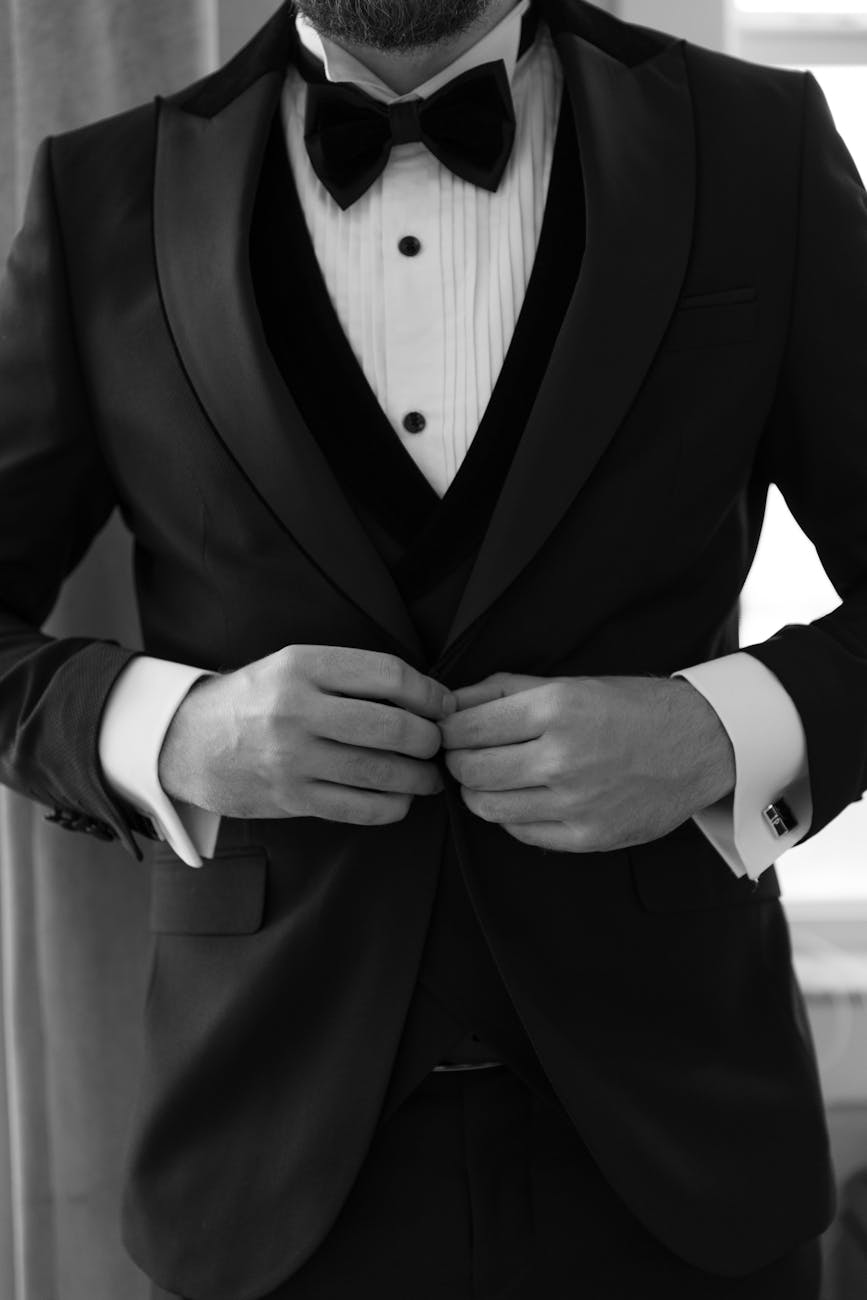
Learning to dress not for attention, but for alignment.
(10 minutes)
There’s a moment each morning — sometimes brief, sometimes lingering — when we stand in front of our clothes. Most days we treat it like a task: What should I wear? What’s appropriate? What’s clean? What matches? But on some rare days, there’s something else going on. We’re not just picking clothes. We’re listening.
And in that moment, getting dressed becomes less of an errand and more of a quiet conversation.
When Style Begins Before the Mirror
Some people seem to dress well without effort. Curiously, it’s not because they own the most expensive pieces, or because they follow every trend, or because they know every rule in menswear or womenswear.
Their clothes simply make sense on them.
Almost as if the wearer and the wardrobe agreed on something beforehand — a silent contract about identity, mood, purpose, and personality.
That agreement is intentionality.
What Clothes Say When We Let Them
Clothing has always been a language. It communicates before we speak, and sometimes more honestly than we intend. The rolled sleeve when we need ease. The polished shoe when we need structure. The bold color when something in us wants to stand out. The monochrome outfit when we crave quiet.
Even when we think we’re being neutral, we’re still saying something — just softly.
We don’t need to decode it logically. We can feel when someone is wearing something that reflects their inner world, and when someone is wearing something that masks it.
That difference is what makes an outfit “work.”
Effort Isn’t the Same as Intention
It’s easy to confuse dressing intentionally with dressing hard.
Effort tries to gain approval.
Intent listens for alignment.
- Buying something just because it’s “nice” — effort
- Reaching for something because it feels right — intention
- Wearing something loud to be noticed — effort
- Wearing something bold because you feel bold — intention
Clothing chosen out of intention has a calmness to it. Even when the outfit is dramatic, the motivation behind it is steady.
When the Outfit and the Person Agree
The best outfits aren’t always the most impressive. They’re the most integrated.
When we dress intentionally:
- fabrics stop being trends and start being sensations
- fit becomes comfort with self rather than conformity
- accessories feel like punctuation rather than obligation
Nothing about the outfit has to be perfect, expensive, or extraordinary. It just has to be true.
That truth is what brings clothing to life — not the color, not the shape, not the brand. Intentionality is the animating force.
It’s Not a Gender Thing
Men and women dress differently, but intentionality is universal.
Everyone — regardless of style or identity — is ultimately negotiating the same question:
How do I show up in a way that reflects who I really am?
Where that answer leads is personal:
- sharp tailoring or relaxed silhouettes
- monochrome or wild color
- vintage or modern
- simplicity or maximalism
The destination varies.
The principle doesn’t.
The People Who Dress the Best Aren’t Trying to Be Stylish
If you think about the people whose style you admire, there’s a pattern:
They don’t dress to impress you.
They dress because what they wear mirrors who they are.
They repeat pieces unapologetically.
They choose based on instinct rather than fear.
Their wardrobes are less about acquisition and more about recognition: This feels like me.
That recognition is irresistible.
A Gentle Way to Practice
You don’t need a new wardrobe to dress intentionally. You just need a new question.
Instead of:
“What will other people think?”
try:
“What do I think of myself when I wear this?”
A few other quiet prompts:
- Do I feel more like myself in this?
- Does this outfit support where my mind is today?
- If I removed other people from the equation, would I still choose it?
If the answer is yes, the outfit is already right.
In the End
The wardrobe isn’t just a collection of clothes.
It’s a collection of possibilities — invitations to express who we are, who we’re becoming, or even who we want to remember ourselves to be.
And dressing well isn’t really about impressing the world.
It’s about closing the gap between the outer and the inner.
When what we wear agrees with who we are, even the simplest outfit feels complete — because the conversation between self and wardrobe lands on the same note.
 The Art of Grit
Leave a comment