
(8 Minutes)
On leaving a mark that the eye cannot follow — but the world cannot escape
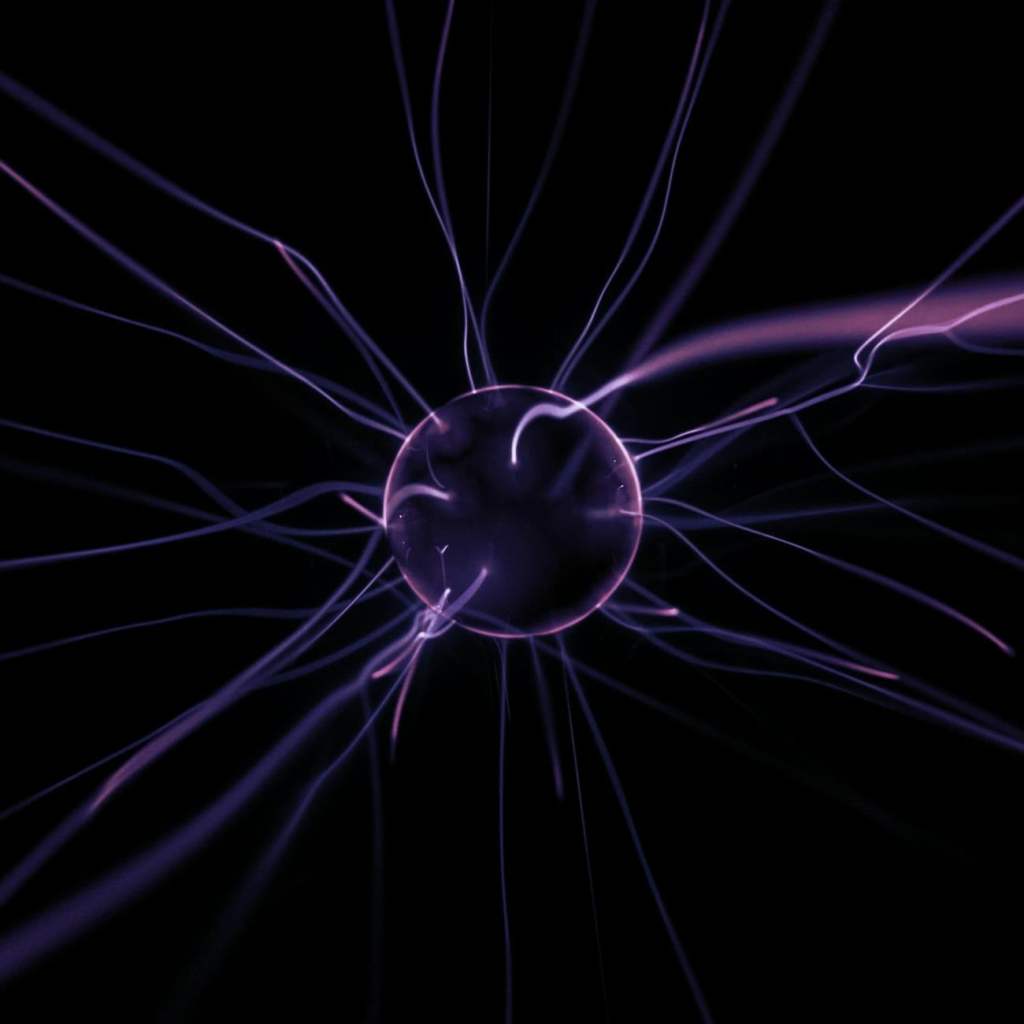
There is a force in the universe that cosmologists call dark energy. It does not glow. It cannot be photographed or held or pointed to. And yet it is the dominant force in the cosmos — quietly pushing everything apart, structuring the fate of galaxies, shaping the architecture of existence itself. Scientists can detect its influence in the way matter moves, in the curvature of space, in the trajectory of light bent around things unseen. But they cannot see it. Not yet. Perhaps not ever. And still, the universe turns on it.
We talk a great deal about legacy. We argue about what it means to matter, to leave a mark, to have lived fully. And almost inevitably, the conversation drifts toward the visible: the politician whose name goes on a bill, the executive whose portrait hangs in a boardroom, the celebrity whose face multiplies across screens. We equate impact with surface. We confuse volume with force.
But there is another kind of mark. Quieter. Deeper. More durable. It moves like a current beneath the water’s surface — invisible to the casual eye but responsible for everything that lives above it.
The Noise at the Top
We live in an age engineered for visibility. Every platform is designed to reward what rises to the surface: the loudest voice, the most striking image, the sharpest provocation. Social media doesn’t just broadcast life — it algorithmically filters it toward whatever produces the most immediate reaction. The result is a civilization that has become extraordinarily good at identifying the surface tension of things while remaining almost entirely ignorant of what flows underneath.
Power, we have been taught, wears a name badge. It announces itself. It runs for office, holds press conferences, issues statements. And there is a kind of power that does work this way. But it is not the only kind — and it may not even be the deepest kind.
Consider what we actually remember about the people who shaped us. Not the speeches. Not the titles. The Thursday morning they sat down with us when we were struggling and didn’t flinch. The standard they held that made us hold it ourselves. The choice they made in private that nobody saw, that changed the entire temperature of the room we grew up in. The legacy that operates at this frequency doesn’t trend. It transmits.
“The most durable marks are not carved in stone. They are written into the behavior of people who carry them forward without knowing they do.”
Every Thursday, One Hour South of Beirut
Dr. Issam El-Rassi is one of the leading pediatric and congenital heart surgeons in Lebanon and the Middle East. As Chief of Pediatrics Cardiac Surgery at the American University of Beirut Medical Center’s Children’s Heart Center, he trained at the finest institutions in France and Australia. He has over 70 published research contributions and is a founding member of charitable associations dedicated to children with congenital heart disease. And every week, quietly, he drives one hour south of Beirut to a hospital in Saida and operates on the children of Syrian refugees. For free.
His reasoning, when asked, is disarmingly simple: “We cannot ask a father living in a tent to pay $3,000. It’s a huge sum of money. For a Lebanese middle-class person, it’s the salary for three months.” So he doesn’t ask. He goes. Every Thursday. He is the only surgeon there. As he once put it: “If I decide to be sick one week and not go there, a patient will pay the price.”
There are no cameras that follow him to Saida. No headline captures the moment he closes a chest cavity on a six-month-old whose parents fled a war with nothing. No algorithm promotes the fact that his team’s surgical mortality rate is below three percent — outcomes comparable to the best centers in North America and Western Europe, achieved in a country with roughly ten percent of the resources and, in his own words, a negative budget.
He is not performing his humanity. He is exercising it. Routinely. Structurally. The way a river flows — not because anyone is watching, but because that is what rivers do.
What is the legacy of a child who received a corrected heart at three months old? What profession does he enter? Whose life does he save in turn? How many children will that child raise, and with what instilled sense of what human beings owe one another? You cannot chart it. You cannot press it into a trophy or name a building after it. But somewhere in the social fabric — invisible, potent, permanent — there are lives that exist because one surgeon drove south every Thursday.
This is the undercurrent.
The Myth of the Visible Life
We are not wrong to admire ambition. The drive to build, to lead, to change systems at scale — these are worthy pursuits, and the world needs people who pursue them with full conviction. But we have made a category error that costs us dearly: we have conflated prominence with significance. We have confused the people we can see with the people who matter most.
Think about the parent who raises a child with presence — not performance. The one who shows up not for the recital but for the ordinary Tuesday when their kid is confused about who they’re supposed to be. Who models, through unremarkable daily behavior, that integrity isn’t a posture adopted in public but a way of moving through every private moment. That child grows up with an internal compass they will carry into every room, every relationship, every decision of their life. They will pass it on. And on again.
The effect of that parenting doesn’t appear in any measurement we take of society. It doesn’t register on the influence metrics we obsessively track. And yet if you removed it — if you somehow subtracted all those quietly well-raised children from the world — the civilizational collapse would be immediate and total. The whole structure rests on this invisible foundation. We just can’t see the foundation from the surface.
Or consider the teacher who holds one student to a higher standard long after everyone else has written that student off. The neighbor who checks in on the elderly man two doors down. The mentor who makes time not because it is convenient but because they understand that time, given deliberately, is a form of faith in someone’s future. None of these people will appear on a list of the year’s most influential figures. All of them are changing the world.
Living Fully Is Not the Same as Living Loudly
There is a difference between a life lived carelessly and a life lived quietly. Carelessness is drift — moving through time without intention, leaving nothing behind except the space you occupied. A quiet life, by contrast, can be one of extraordinary density. It can be packed with meaning, saturated with deliberate choice, dense with the kind of investment that compounds over decades in people and communities you may never even meet.
To live fully is to recognize that your influence is not bounded by your visibility. It is bounded only by the depth of your engagement with the people and circumstances in front of you. Every conversation held with genuine presence. Every commitment kept when no one would have noticed if it were broken. Every moment of difficulty met without flinching — not for an audience, but because that is the standard you’ve set for yourself and silently transmitted to everyone watching, including those you haven’t noticed are watching.
This is what cosmologists are really describing when they struggle to account for dark energy. Not just a physical phenomenon, but a structural one: the recognition that the most consequential forces in a system are often the least visible. That what you cannot detect on the surface is precisely what is organizing everything beneath it.
“Your influence is not bounded by your visibility. It is bounded only by the depth of your engagement with the people and circumstances in front of you.”
The Undercurrent Does Not Need to Be Seen
El-Rassi will not be a household name. The full weight of what he has done — the children who will live out complete lives because he drove south every Thursday — will never be calculated. It cannot be. That is not a failure of recognition. That is the nature of undercurrents. They don’t require acknowledgment to flow. Their power is not dependent on anyone noticing.
This is perhaps the hardest thing to accept in a world that has made visibility feel synonymous with worth. That the most meaningful things you will ever do may go entirely unmarked. That the child you raise with full attention, the commitment you keep in private, the skill you bring to the margins where no cameras follow — these may be your most lasting contributions to the human project.
The question worth asking is not: How do I become known? It is: What would I do if no one were watching? And then — do that. Do it with full force. Do it as if the entire architecture of the future rests on it — because in ways that are real and cumulative and utterly invisible to any instrument we have yet built, it does.
What It Means to Leave a Mark
There will be people whose names are written in public record — on legislation, on buildings, on the spines of books. Some of them will have deserved it. But the deeper record of a civilization is not held in its monuments. It is held in the behavior of its people. In the capacity for sacrifice modeled by one generation and absorbed by the next. In the willingness to drive an hour south every Thursday because a baby’s heart is broken and someone with the skill to fix it needs to be the one who goes.
A life fully lived is not necessarily a life loudly lived. It is a life in which the full weight of your capability — your attention, your skill, your presence, your willingness to be inconvenienced by what matters — is deployed without reservation into the people and places within your reach. It is a life in which you become an undercurrent: something that moves beneath the surface of things and shifts the entire direction of the water above it without ever needing to be seen.
Dark energy does not care whether cosmologists understand it. It structures the universe anyway. The surgeon driving south every Thursday does not require the world’s applause. The children survive anyway. The parents in the tents carry a different story about what human beings are capable of. And that story moves forward, invisibly, through every life it touches.
Leave that kind of mark. The kind that doesn’t need a frame.
The universe’s most powerful force has never once been photographed. It shapes everything regardless.


Leave a Reply