
(7 Minutes)
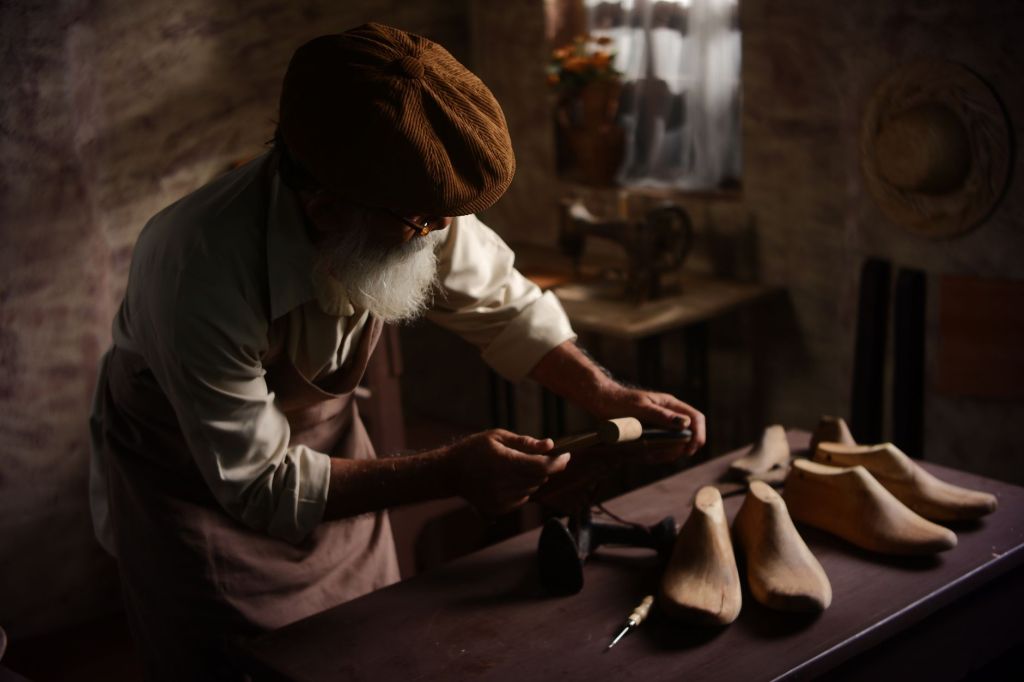
There was a shoemaker who carved his own lasts.
A last is the wooden form a shoe is built around, shaped like a foot. The leather is stretched over it, pressed against it, stitched around it. Most shoemakers bought theirs. This one, to save money, made his own. He would take a plain block of wood and work it down by hand, with a machete, with pieces of broken glass, with sandpaper, until the block slowly became the shape of a foot. He did it all by himself. By the time he was done, he was full of sawdust.
In the old story, Geppetto carves a son out of a block of wood. This man was not a woodcarver, not really. He made shoes. But he had a son, and the son grew up near that bench, near the machete and the glass and the sawdust. In a way the old story would recognize, he was being carved too.
Nobody called it a lesson. Children rarely know when they are learning. But some things settle in long before there are words for them. That a thing is made, by someone, in a particular way. That most of what holds a shoe together is hidden from view. That the care no one sees is what decides whether a thing lasts.
There is something about a last that is easy to miss. When the shoe is finished, the last is pulled out. No one who wears the shoe ever sees it. But every curve of the shoe follows its shape. It does its work, and then it disappears into what it made.
The son grew up, and somewhere along the way he found the rest of the vocabulary. The Italian way of living, which treats getting dressed less as a chore than as a courtesy, to yourself and to whoever you will meet that day. The films where men moved through their lives in well-cut clothes as if they had forgotten they were wearing them. He recognized it the way you recognize a language you heard as a child, long after you have stopped speaking it.
Five centuries ago, Baldassare Castiglione gave that quality a name. He called it sprezzatura: a studied ease that hides the effort beneath it. The courtier, he said, should do difficult things in a way that makes them look like nothing at all.
Centuries later, the sociologist Pierre Bourdieu explained where that kind of ease usually comes from. He called it habitus: the sensibilities we absorb so early that they stop feeling learned and start feeling like nature. You can buy the jacket, his thinking goes, but not the instinct for how to wear it. That has to be absorbed.
The son didn’t need either of them to tell him. He had grown up beside a bench.
It is why, all these years later, he still cares how a piece is constructed, where it came from, why it was made the way it was. A collar. A seam. The weight of a fabric. Most people never notice these things, and they shouldn’t have to. That is the point. The work is supposed to disappear into the wearing.
The designer Hardy Amies once said that a man should buy his clothes with intelligence, put them on with care, and then forget all about them. It is close to what the shoemaker did without ever saying it. The intelligence and the care come first, and they are real. But the last step matters just as much. Once the work is done, you let it go. You stop performing it. You walk out the door and live.
That is the part people misunderstand about dressing well. They think it is about being seen. It isn’t. The best-dressed people are not trying to be noticed. They are simply wearing the result of care that happened somewhere else, earlier, out of sight. At a bench. In a habit. In a childhood.
If someone asked the son why he dresses the way he does, he might not have an answer ready. The true one is simple, and it isn’t really about clothes. He grew up near someone who made things well, and who believed, without ever needing to say it, that how a thing is made matters even when no one is looking.
The shoes his father made were always meant to wear out. The shape he left in his son was meant to last.


Leave a Reply