
(6 Minutes)
For most of my life, I knew exactly where I stood.
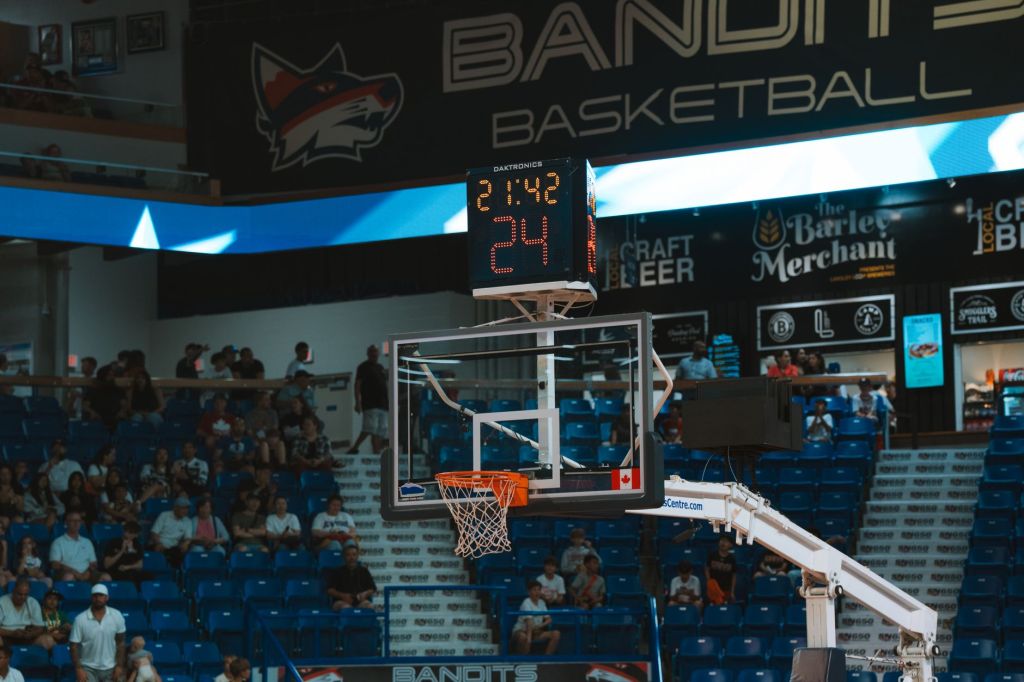
There was a clock and there was a score, numbers lit high above the court that settled every question before anyone could argue it. You were up or you were down. You had won or you had not. Whatever I felt about a night, the scoreboard had already decided what it meant, and there was a strange comfort in that. Nothing had to be interpreted. It was all right there, in lights.
I loved that clarity. I think most athletes do. The game asks everything of you, and in return it gives you an answer.
When I stopped playing, I assumed the scoreboard stayed behind in the arena with the hardwood and the noise. It didn’t. It came with me, quietly, the way habits do. Not as a decision, but as a way of seeing. I didn’t notice it because it never announced itself. It simply changed what it counted.
The points became money. The wins became titles, achievements, the visible proof that I was still moving. And somewhere along the way, effort itself became a kind of score. If a day had emptied me, I counted it as a good one. If my calendar was full and my body was tired, I took that as evidence that I was building something. I measured my days by how much they took out of me.
I tried different paths over the years. Different careers, different arenas, different versions of the game. Each one felt like a fresh start, and in many ways it was. What I didn’t see was that I carried the same instrument into every one of them. The court changed. The measuring stick never did.
It’s hard to see your own measuring stick while things are going well. When the numbers rise, the stick feels like truth. It feels like the world agreeing with you.
It’s only when things don’t go well that you finally notice what you’ve been holding.
That’s how it happened for me. Not with one dramatic loss, but with an accumulation, a collection of things that didn’t go the way I had planned, across paths I had chosen carefully. What unsettled me most wasn’t the disappointment. Disappointment I understood; the game had taught me that. What unsettled me was noticing, almost from a distance, that I was grading each setback in exactly the same units as everything before it. Different endeavor, same verdict. Same stick. The same lights above the court, still waiting to tell me who I was.
The question came later, and it came quietly.
It came in a quiet moment at home, one of my own. I wasn’t asking for anything when a sentence surfaced that I hadn’t gone looking for.
My path might be different than this.
It wasn’t a decision. It wasn’t a plan. It didn’t tell me what the other path was. It was more like a door I hadn’t known was there, opening an inch. I’ve come to believe that’s how the important questions usually arrive. Not in the arena, not while we’re keeping score, but in the places the scoreboard can’t reach.
I want to be careful here, because I don’t think the scoreboard was a mistake. It gave me discipline. It taught me to show up when I didn’t feel like it, to work when no one was watching, to accept the verdict of a bad night and come back the next day. Those lessons are part of me, and I’m grateful for every one of them.
But a scoreboard can only count what it was built to count. It can count points. It can’t count presence. It can tell you that you won, but not whether you were there for it. It can measure what you took from a day, but never what you gave to the people in it.
That was the cost I hadn’t measured. There were seasons when I was providing for my family without being fully present with them, coming home with my presence already spent. There, but not fully there. By the old measure, those were productive seasons. By any measure that mattered, they were thin.
I don’t think the answer is to build a better scoreboard. It would be easy to trade one set of numbers for another and keep the same anxious eye on the count. The stick would just get a new label.
What I’m learning instead is harder to describe, because it doesn’t light up. It is closer to owning the whole of my life rather than the parts that scored well. The paths that didn’t work out belong to me as much as the ones that did. The seasons I arrived tired are part of the story, and so are the days I didn’t. None of it needs a verdict. It needs to be lived honestly, and that is a different thing from being won.
Some days I still feel the old reflex, the urge to look up and check where I stand. Old athletes don’t lose that easily. But more often now, I return to that kind of quiet, where nothing is being counted, and I let the question sit with me instead of answering it.
My path might be different than this.
For most of my life, I needed the scoreboard to tell me what a day meant. I’m only now learning that the days that mattered most never showed up on it at all.


Leave a Reply